
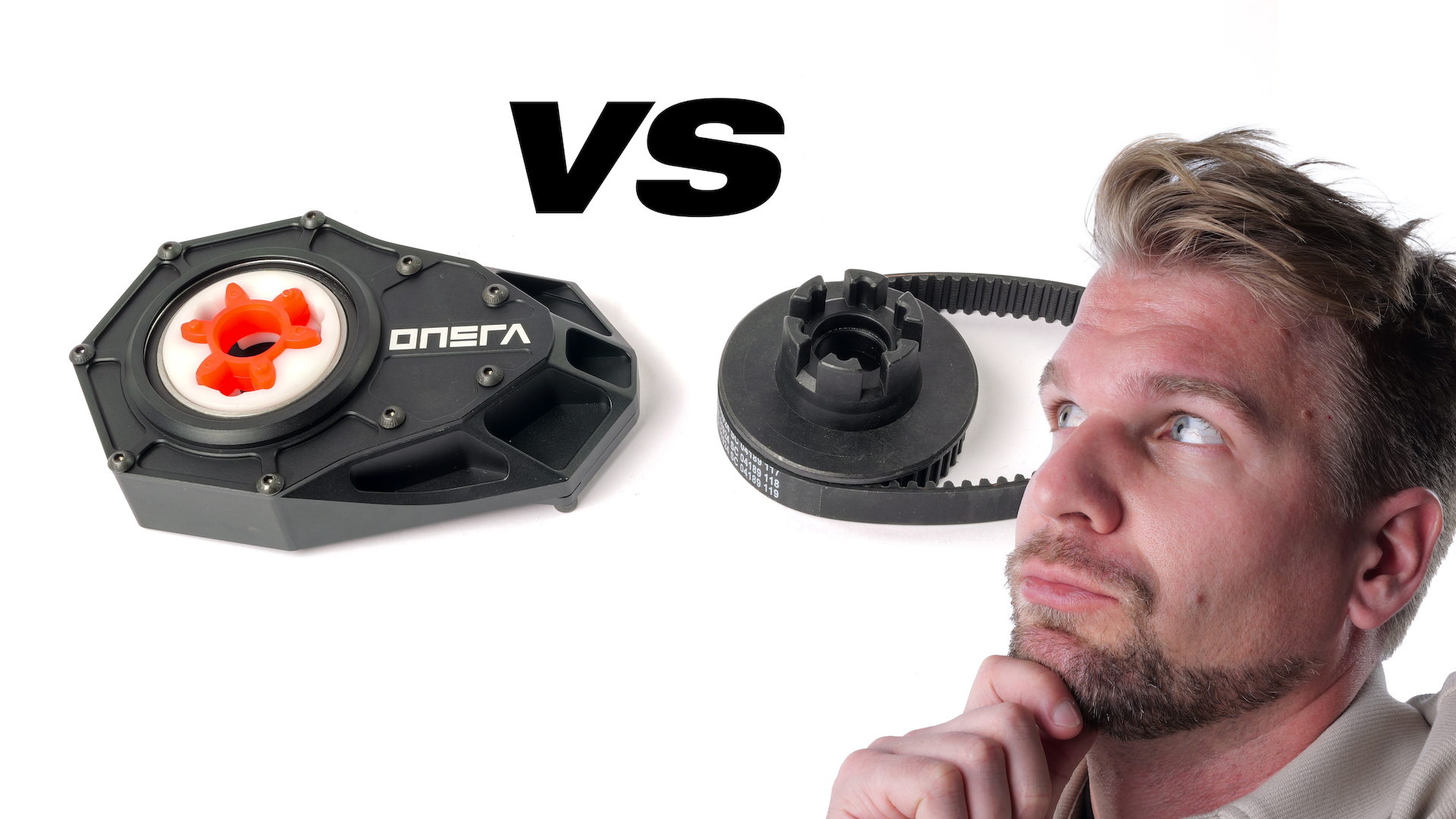
Belt Drive vs Gear Drive Electric Skateboards – What Really Matters in 2025
Most online comparisons are recycled content written by people who don't even ride.
Not here. This is about real-world testing with the new ONSRA VELAR 2.0, its upgraded tensioner system, and our latest gear drive.
Let's look at what really matters – sound, performance, weight, maintenance, wheel options, and which type of rider each system suits.
Sound: Identical, period.
Forget the myth that gear drives are noisy and belt drives are silent.
We tested both systems back-to-back for this video, and the result is simple:
Both gear drive and belt drive are equally quiet.
Any difference heard online usually comes from poor tuning, worn belts, or older casings – not the system itself.
Tensioner Upgrade: Belt Slip is Almost Gone
The new VELAR 2.0 tensioner has been a game-changer for belt drive:
-
Less belt slip
-
More stable tension
-
More consistent power
This solves one of the old issues many riders had with belt drive.

Weight: Belt Drive Advantage
If you want a lighter electric skateboard, this is where belt drive has the edge.
Belt drive = approx. 1 kg lighter.
For riders who want the lightest setup possible, belt drive still makes sense.
Wheel Compatibility: Gear Drive Limitations
This is where many riders misunderstand gear drive.
Gear Drive:
-
Works perfectly with large wheels (AT, rubber, off-road).
-
Cannot use small street wheels – the casing is simply too large.
Could we make a smaller casing?
Sure… but it would immediately overheat with large wheels, and we don't build junk.
Belt Drive:
-
Easily allows street wheels, rubber wheels, and AT wheels.
-
Great if you mostly ride street and like the classic longboard feel.

Acceleration & Braking: Gear Drive Advantage
This is where gear drive really shines.
-
Stronger initial push
-
More instantaneous braking
-
More direct response
The whole experience feels more stable, especially at high speeds or off-road.
Range & Top Speed: Identical
Many people think gear drive increases range.
False.
Range depends on:
-
The battery
-
The ESC
-
Riding style
-
Terrain
Gear drive and belt drive have the same range and top speed when the electronics are identical.
Maintenance: Depends on Your Preference
Gear Drive:
-
Virtually no maintenance
-
Grease check about every 2000 km
-
Nothing to adjust
Belt Drive:
-
Cheaper to buy
-
Belts are easy and inexpensive to replace
-
Occasional tension check required
If you want a "ride it and forget it" system, gear drive is for you.

Heavier Riders: Gear Drive Only
If you weigh 90 kg (200 lbs) or more, gear drive is the safest and strongest option.
Why?
-
More low-end torque
-
Less risk of slippage
-
More powerful braking
-
More stable under load
Simple and clear.

So, Which System Should You Choose?
Choose Gear Drive if you want:
-
Zero maintenance
-
Maximum safety
-
Stronger acceleration & braking
-
Better off-road performance
-
You are a heavier rider
-
The most durable system we offer
Choose Belt Drive if you want:
-
A lighter board
-
Street wheels
-
Quick belt changes
-
Lower initial cost
-
The most flexible wheel choice
Both systems are extremely refined on our latest models – you can't go wrong.
The right choice depends on your riding style and terrain.
Want to see the real test?
Here is the full test video we just published:
Partager:
Skateboards électriques à entraînement par courroie ou par engrenage – Ce qui compte vraiment en 2025
Transmission par courroie ou par engrenages – Comparaison des skateboards et longboards électriques 2025