The ONSRA VELAR is no ordinary electric skateboard – it's a high-performance board available with two completely different drive systems: belt drive and gear drive.
Both versions are powerful, precisely built and fully CNC-machined. But on the road they behave very differently.
Here's the clear 2025 comparison, so you know exactly which setup suits your riding style.
https://onsra.ch/en/collections/velar

How do the two systems work?
-
Belt drive:
Transfers motor power to the wheels via a rubber belt. The belt can give slightly and dampens vibrations. By swapping pulleys you can tailor the gear ratio – more torque or a higher top speed, your choice. -
Gear drive:
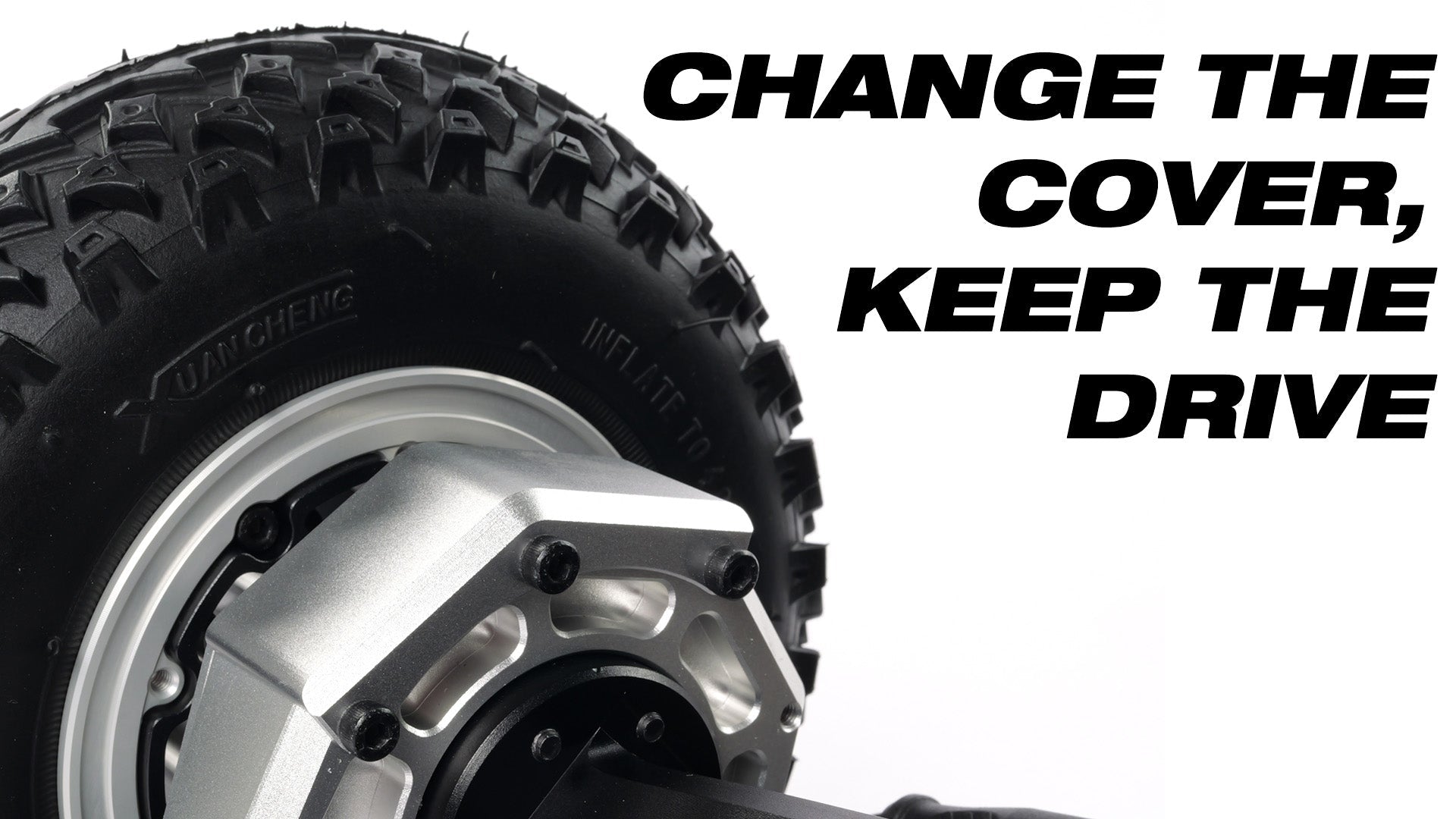
Uses precision-machined steel gears inside a fully enclosed CNC housing. The drive is permanently lubricated, completely maintenance-free and delivers power with zero slip.
Both versions share the same 14S4P (1036 Wh) battery, dual 6384 150 Kv motors and massive torque –
the only difference is how that power gets to the road.
https://onsra.ch/en/collections/velar
Belt drive – the classic power drive
Pros
-
Strong torque with smooth, controlled power delivery
-
Easy to tune: different pulley sizes for top speed or climbing power
-
Slightly quieter and softer ride feel
-
Wheels on the original VELAR Belt Drive can be swapped quickly (street, rubber, AT) – note: the current VELAR 2.0 / 2.0 S is designed for 200 mm pneumatic AT tyres only
Cons
-
Belts wear and occasionally need re-tensioning or replacing
-
Dirt and stones can shorten their lifespan
-
Less ideal in heavy rain
Ideal for:
Riders who like to tweak their setup, change wheels or do the odd bit of wrenching.
If you love versatility and a little maintenance doesn't bother you, the VELAR Belt Drive is exactly right.
https://onsra.ch/en/collections/velar

Gear drive – the maintenance-free precision monster
Pros
-
Fully enclosed CNC housing – no belt, no slip, no maintenance
-
Instant power transfer with no delay
-
Sealed against dust, dirt and splashes
-
Sharper acceleration, consistent power even under heavy load
-
Distinctive mechanical sound – powerful but clean
Cons
-
Slightly heavier than the belt version
-
Gear ratio isn't as easy to change
-
Wheels are tied to the gear hub system
Ideal for:
Riders who want maximum reliability and consistent performance – whatever the weather.
If you just want to ride without ever adjusting anything, the VELAR Gear Drive is the right choice.
https://onsra.ch/en/collections/velar

Performance comparison at a glance
| Feature | VELAR Belt Drive | VELAR Gear Drive |
|---|---|---|
| Torque behaviour | Smooth and progressive | Direct and explosive |
| Top speed | approx. 62 km/h | approx. 62 km/h |
| Maintenance | Tension / replace belt | None |
| Water and dust protection | Medium | Very good (sealed) |
| Noise level | Softer | Mechanical sound |
| Wheel compatibility | Swappable (original VELAR; VELAR 2.0 / 2.0 S: 200 mm pneumatic AT only) | Fixed gear hubs |
| Weight | Slightly lighter | Slightly heavier |
| Ride feel | Elastic, comfortable | Direct, precise |
Which VELAR version should you choose?
-
Belt drive if you want adjustability – different pulley sizes and a softer ride feel. (The current VELAR 2.0 / 2.0 S is built around 200 mm pneumatic AT tyres only.)
-
Gear drive if you want zero maintenance and maximum efficiency – just charge and ride.
Both versions share ONSRA's 14S battery, CNC manufacturing and 4-year warranty on CNC parts – genuine Swiss engineering quality.
Whichever you choose, you're getting one of the most technically advanced e-skateboards in the world.
Conclusion
The VELAR Belt Drive stands for flexibility and comfort.
The VELAR Gear Drive stands for precision and pure performance.
Both deliver extreme power, impressive range and an unmatched ride feel – the result of real Swiss engineering.
Which system is better? Simple: the one that suits your style.
https://onsra.ch/en/collections/velar


Share:
Electric Skateboard Battery Guide 2025: 99 Wh Travel-Safe Packs & 14S High-Power Range
Street vs All-Terrain Wheels – Which Suit Your Riding Style?